


While the world searches for ways to reduce the carbon footprint in construction, Ukrainian forests can become part of a global solution. It takes nearly a century for a mature forest stand to form. Although forests have tremendous potential for self-regeneration, under certain conditions – on depleted soils, with certain climate changes, after fires – this mechanism may not work, and then artificial reforestation comes to the rescue. And this process begins with a seed. Imagine the scale: to obtain one kilogram of quality Scots pine (Pinus sylvestris) seed requires 100 kilograms of cones, carefully collected by hand. And for this seed to transform into a building that will store carbon for decades – responsibility is needed at every stage.
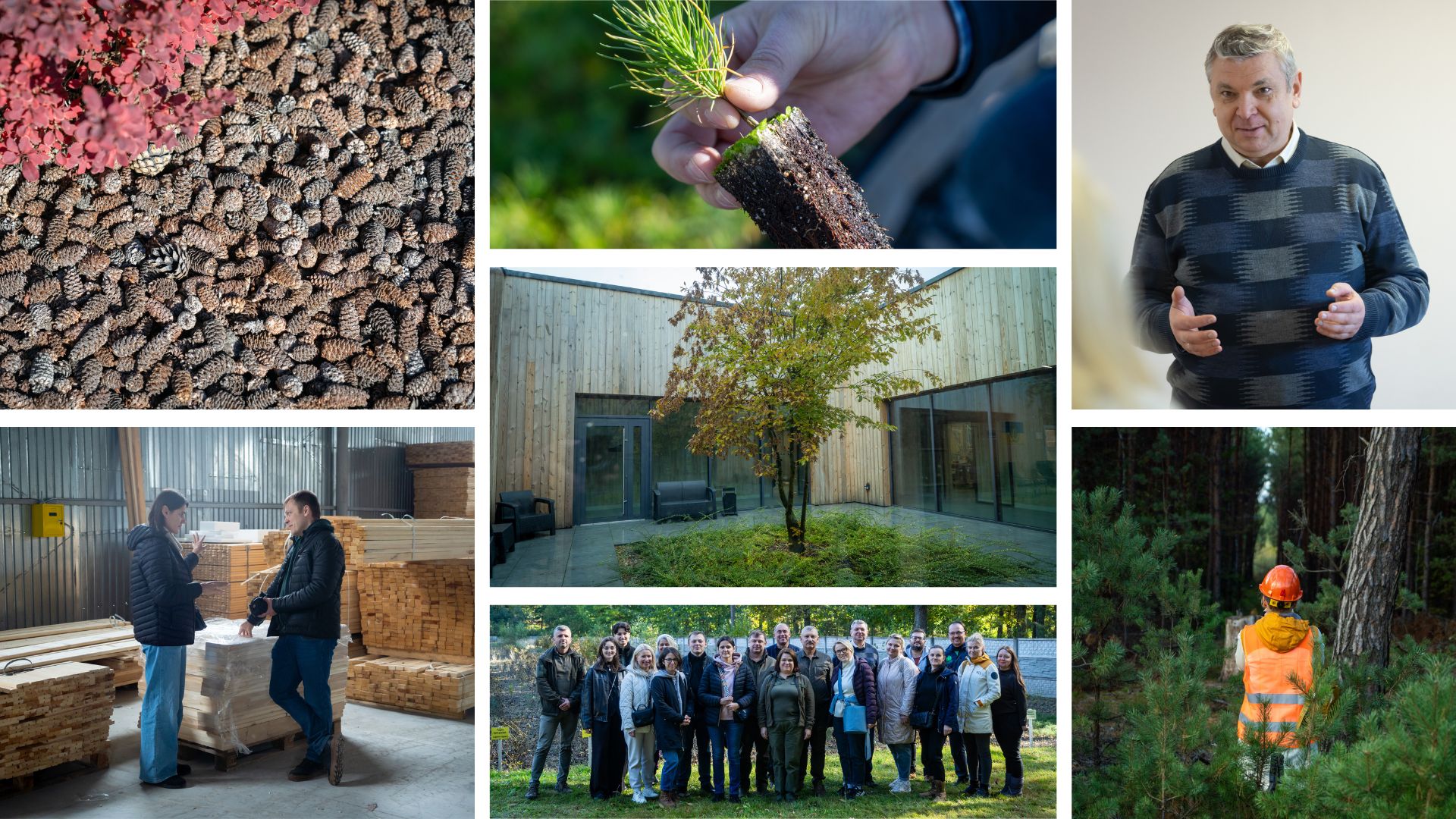
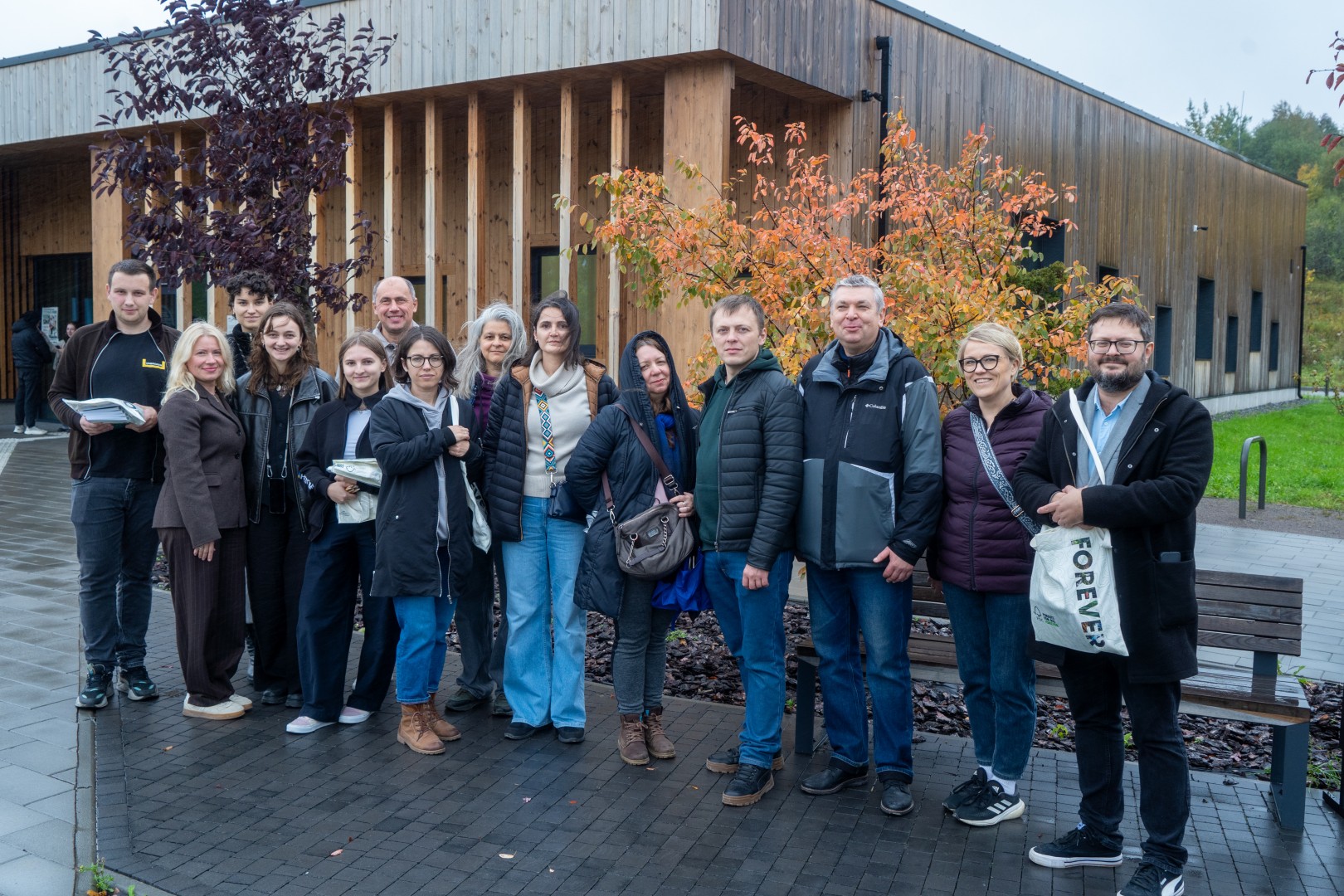
On October 9-10, representatives of media, architecture, and design traveled this path from beginning to end – from a forest seed center and forest nursery in the Lviv region to the innovative CLT construction of the Unbroken National Rehabilitation Center, becoming participants in the professional dialogue "Low-Carbon Construction: Forest Tour".
The Question the World Seeks to Answer
"How can we ensure that forests on one hand provide products – furniture, paper, and serve as building materials, while on the other hand – support the livelihoods of more than 1.6 billion people who depend on forests worldwide?" formulates the key question Pavlo Kravets, FSC Ukraine National Representative. "And most importantly – preserve forests, ensuring those vital ecosystem services, so that our children can be confident that forests with their biodiversity will exist in the future".
 |  |
By various estimates, the construction industry is responsible for nearly 40% of global CO₂ emissions. The production of cement and steel are energy-intensive processes that release enormous volumes of greenhouse gases. In their active growth phase, forests are net carbon sinks – they accumulate more CO₂ than they release, while simultaneously enriching the atmosphere with oxygen. At the same time, timber as a construction material continues to store carbon for decades. For Ukraine, facing large-scale long-term reconstruction, this issue becomes particularly acute.
Day One: Where Forests Are Born
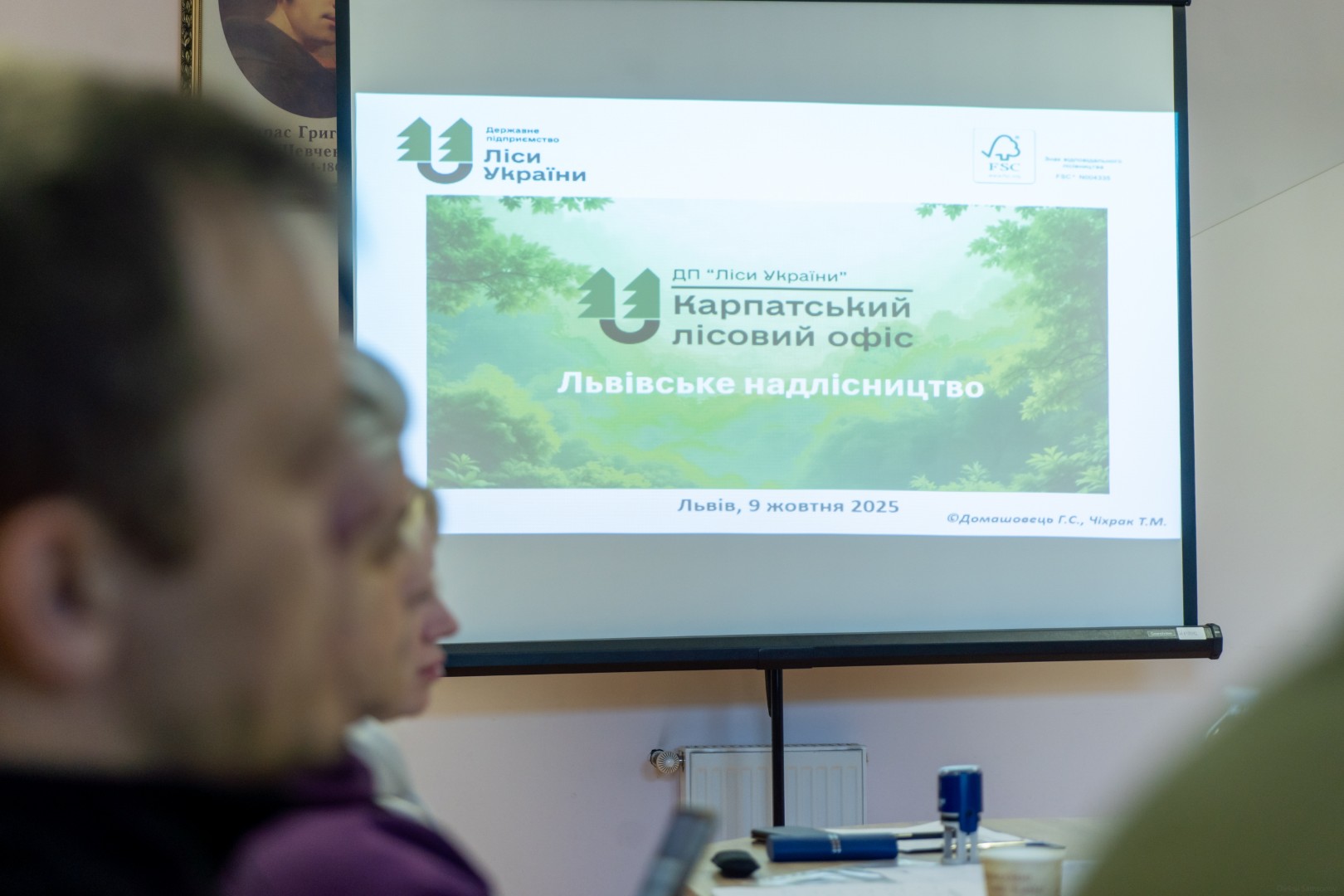
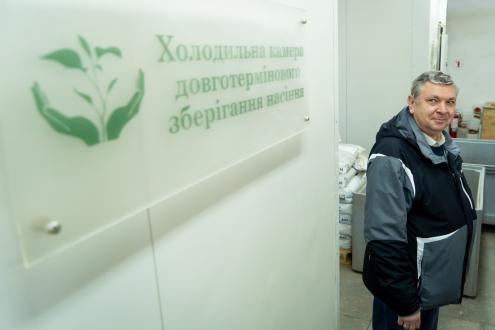
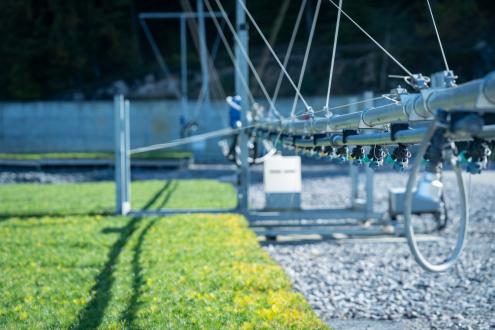
The first stop is at the State Enterprise Lviv Forest Selection Seed Center in Bryukhovychi. Here, among greenhouses and containers with seedlings, begins the story of the future forest.
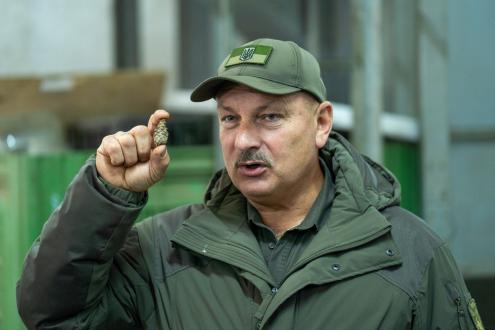
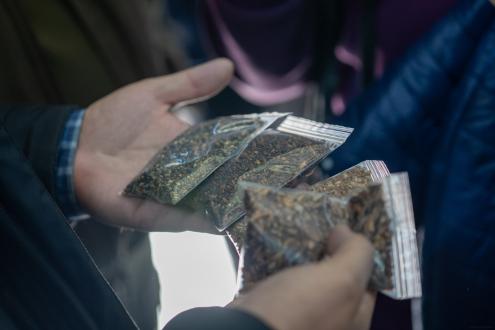
"100 kilograms of cones – and only 1.5 kilograms of seed," explains Taras Chikhrak, Deputy Head of Lvivske Forestry Management Unit, branch of "Carpathian Forest Office", SFE «Forests of Ukraine». Specialists select seeds from the best trees, considering not only productivity but also resistance to diseases and climate change. "Imagine: you need to collect 100 kilograms of cones by hand, process them and you get only 1.5 kilograms of seed. And the cultivation process doesn't end there". The center annually grows about 2.5 million seedlings of various tree species.
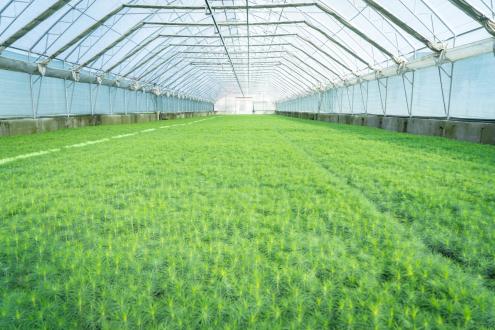
Sowing occurs in three ways: in open ground, in a semi-controlled environment, and with a containerized root system. Automation coexists here with manual labor –depending on what seedlings are needed and for what conditions.
Containerized Root System: An Innovation That Took Root
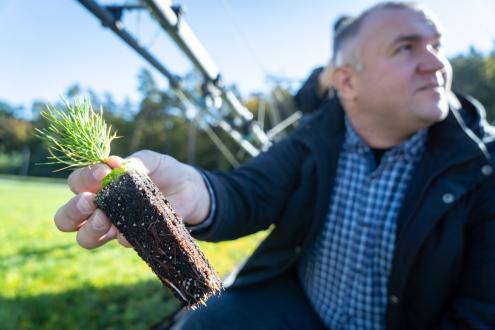
The next stop is the forest nursery of Richkivske Forestry. Here participants see the result of another approach: containers with Scots pine (Pinus sylvestris) and common oak (Quercus robur) grown with a containerized root system.
"When you plant a tree with an open root system, you're tied to the season –early spring or late autumn", explain the specialists. "But with a containerized root system, you can plant almost year-round, except during frost. The seedling doesn't experience transplant stress, and survival rates are much higher". Nearby an unexpected element of forest management: the nursery grows fruit trees. Cherries, apple trees, and cherry plum with lindens will become remises directly in the forest. "In forest management practice, remises are natural or artificially created biotopes, impassable to people, used by birds and animals for overnight stays, daytime rest, and shelter from weather or predators. We grow fruit trees to attract birds and create shelter for them", explain the foresters.
This is part of the balance that FSC certification speaks about: a forest is not simply a source of timber but a complex ecosystem where every element matters.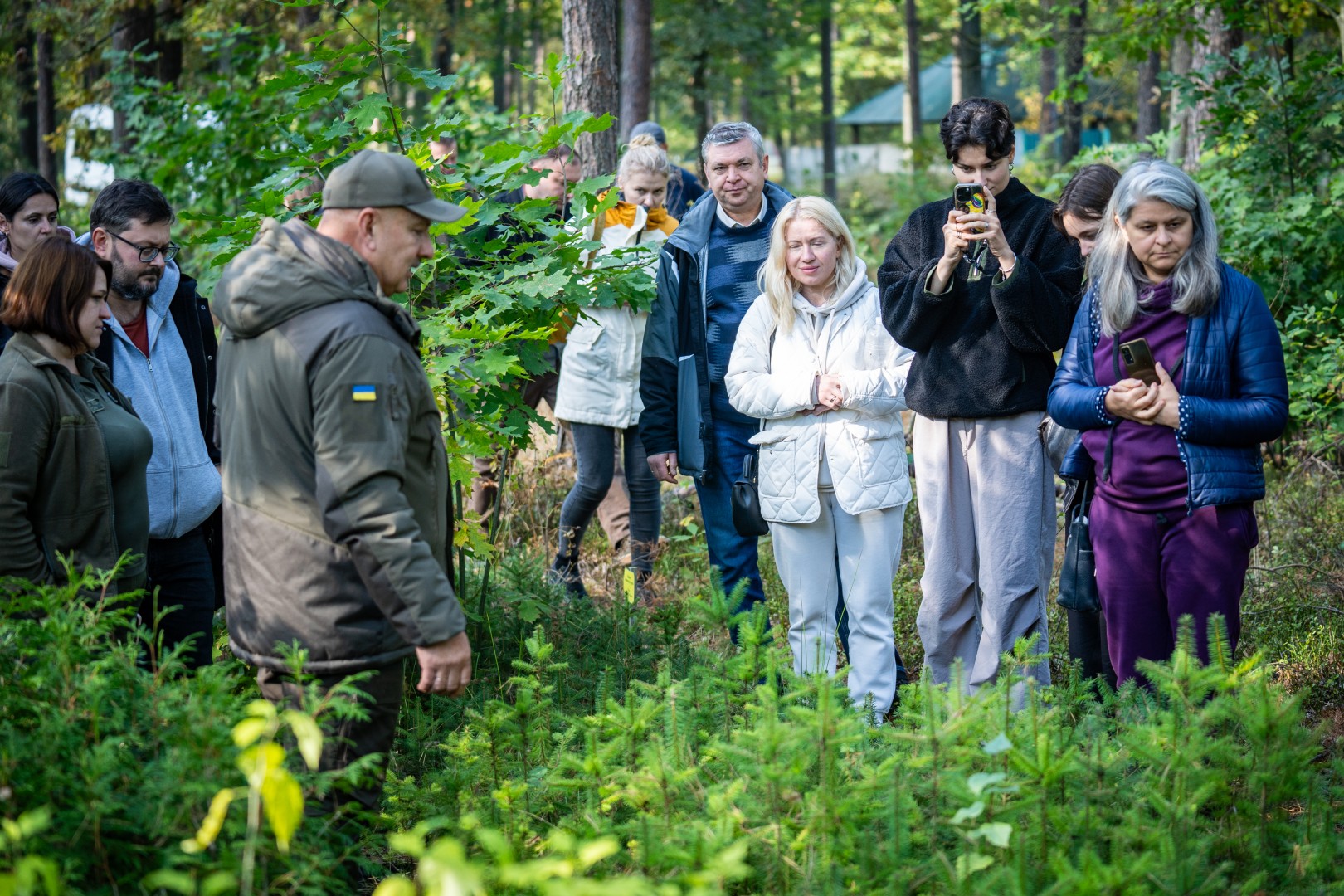
Memory Immersed in the Forest
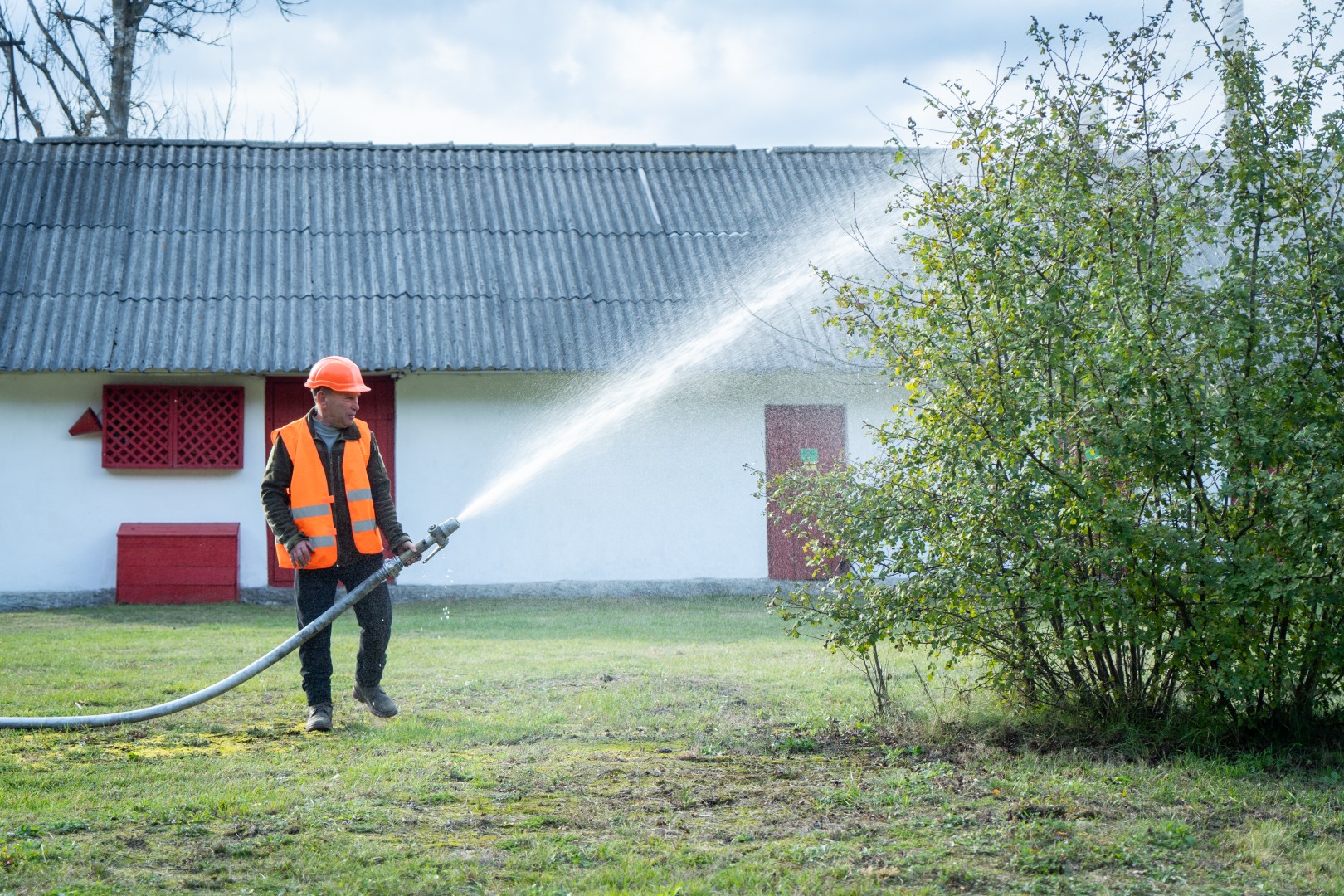
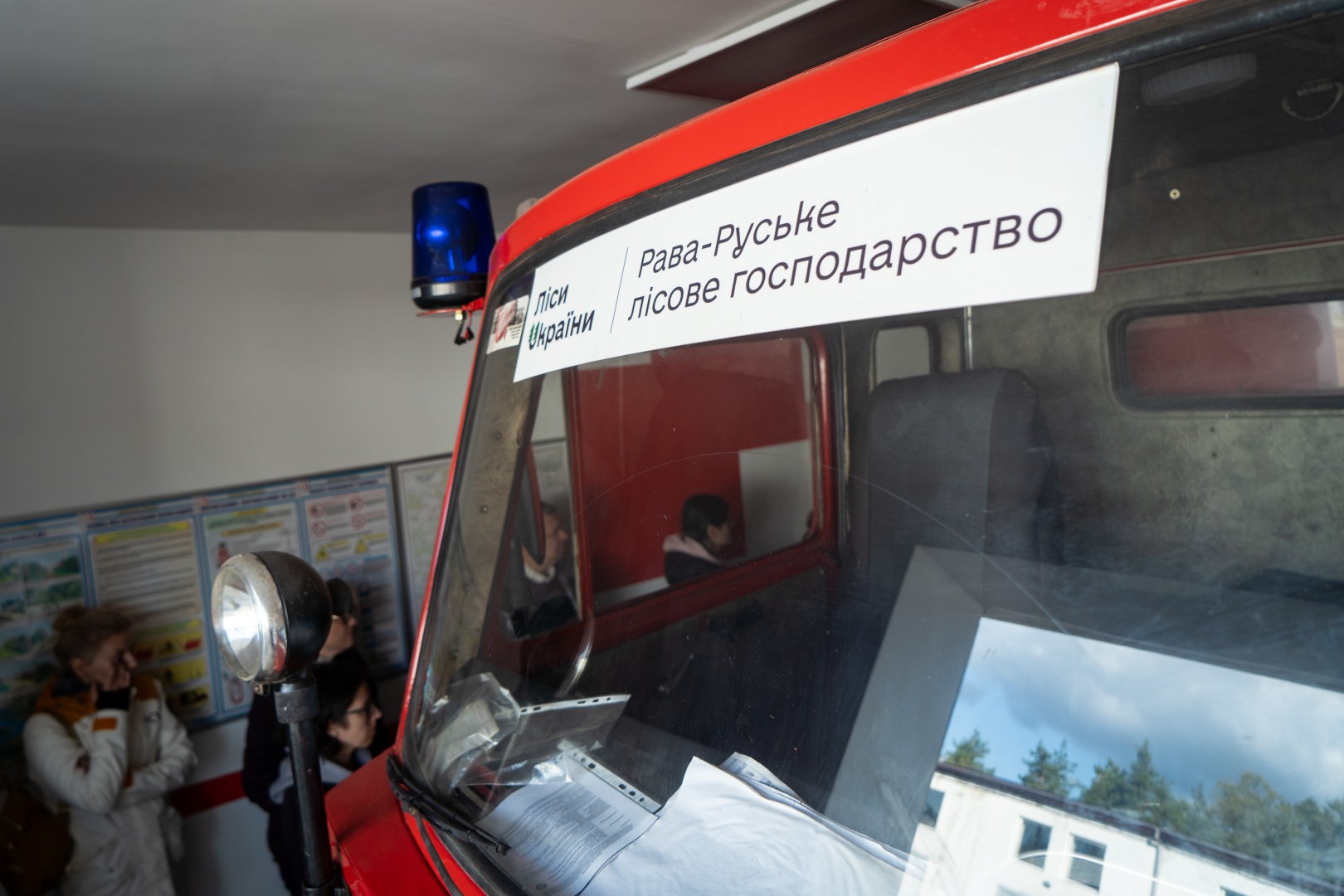
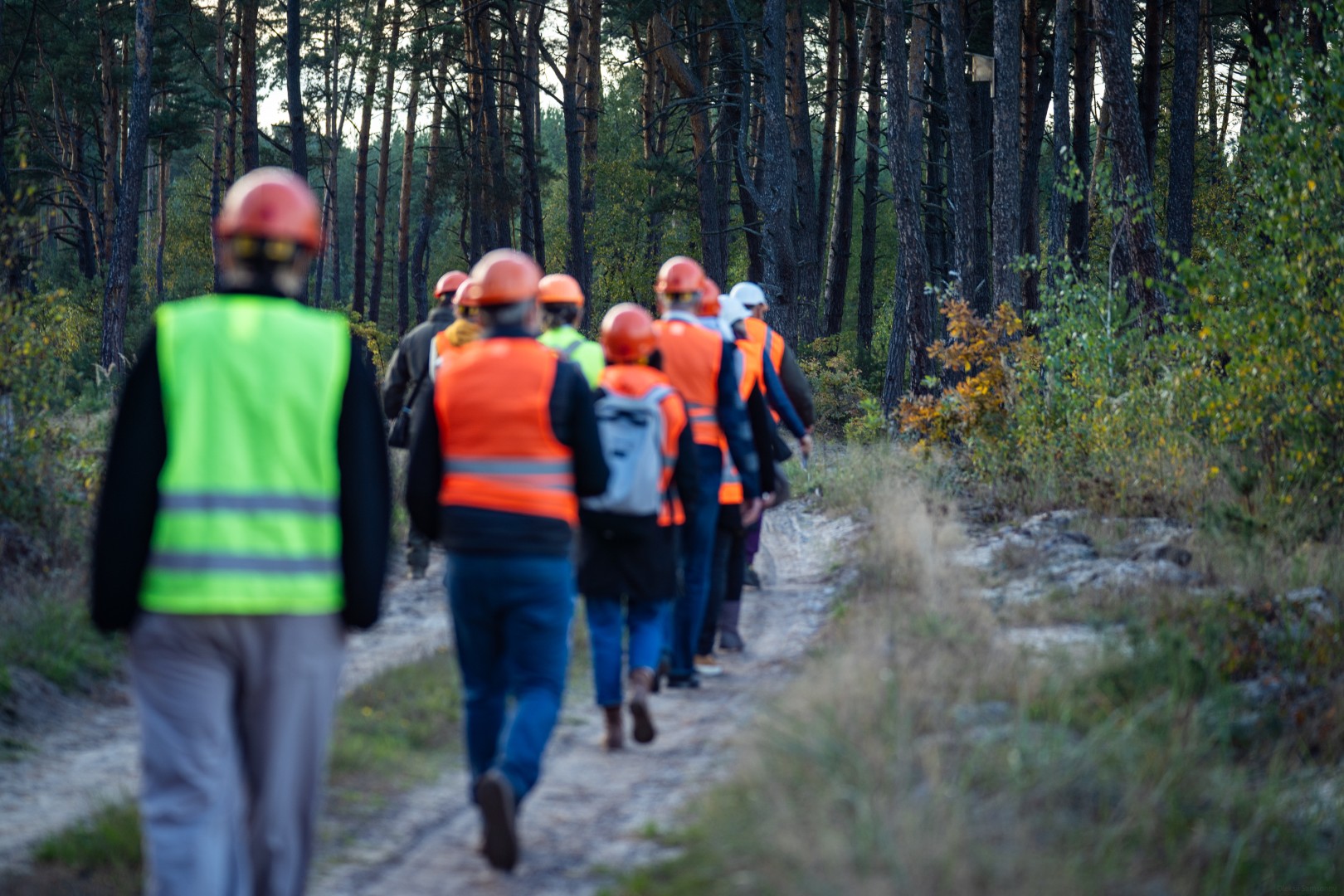
Media tour participants also visited the territory of one of 36 forestries that form the structure of the FSC-certified Lviv Forestry Management Unit. Special attention is paid to forest fire protection, which are frequently visited even on bicycle tours.
This is because forest trails lead to such interesting objects as, for example, the Military Memorial to the Tyrolean Riflemen. It and the surrounding territory have High conservation value (HCV). The enterprise maintains its proper appearance and, accordingly, historical memory. Here in 1914, a historic battle of World War I took place. The forest here performs another function that is part of responsible forest management: remembering not only timber but also what this forest preserves.
 |  |
Nature as the Chief Forester
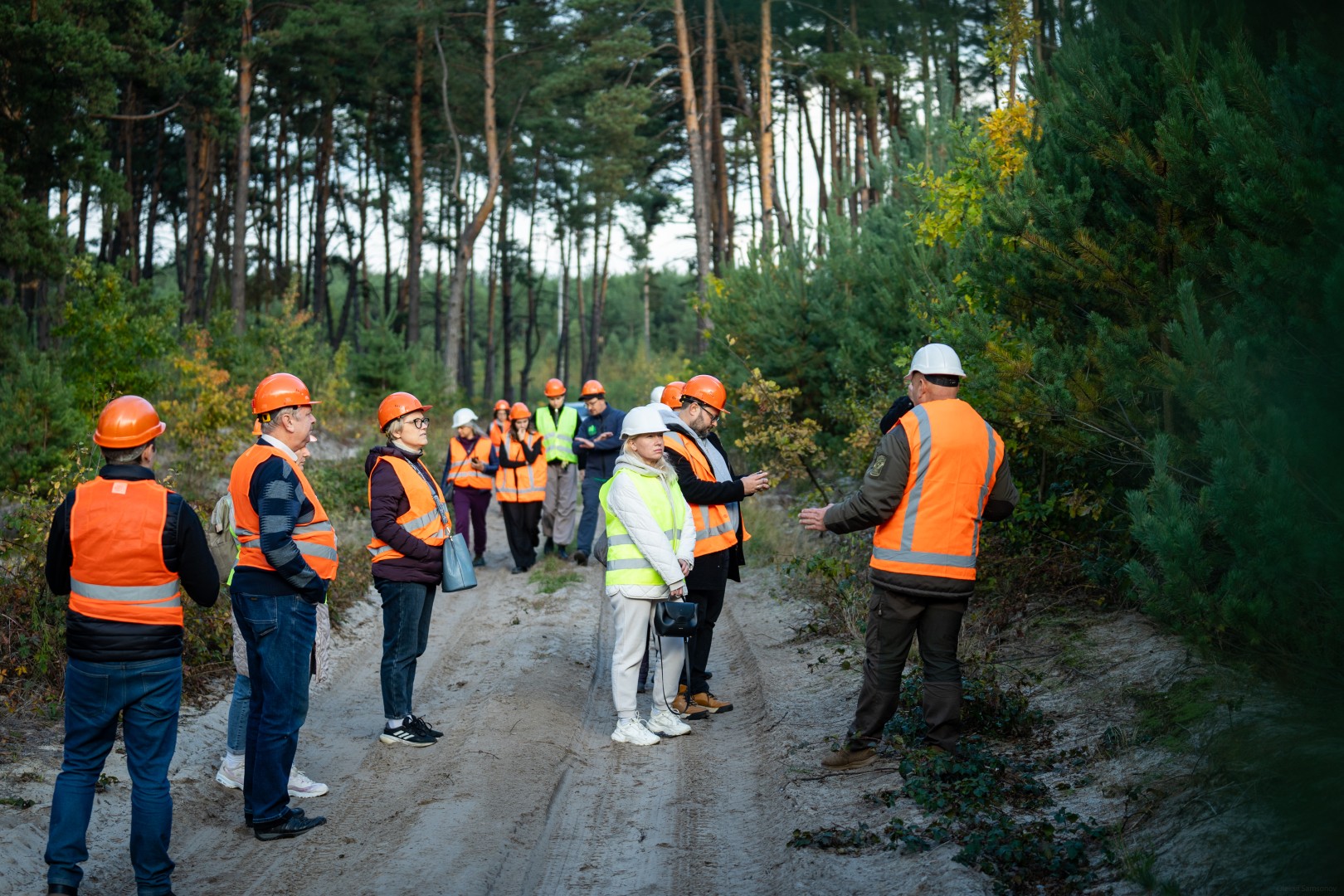
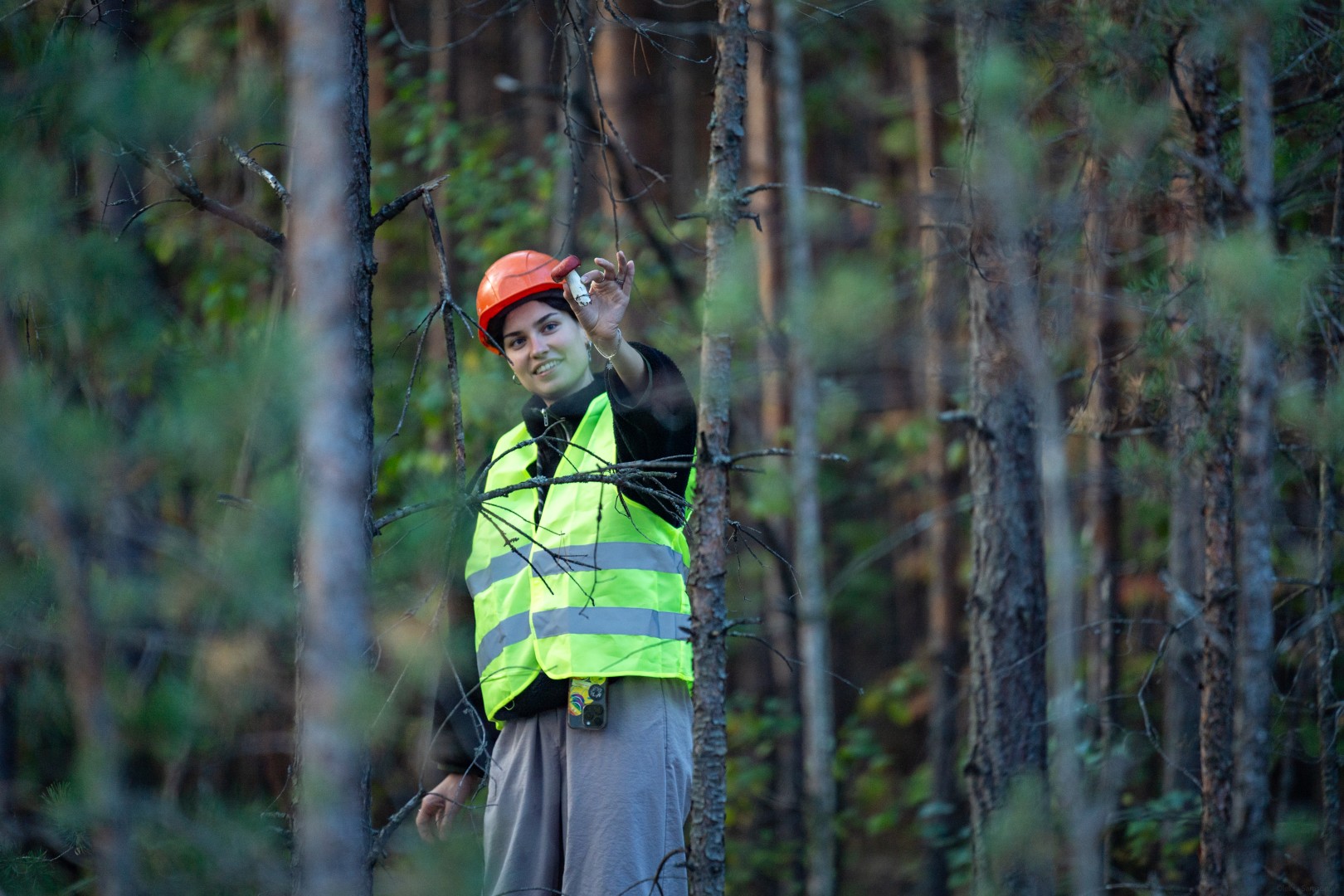
Deeper in the forest, participants see a completely different picture: areas where trees of different ages grow side by side. Young growth breaks through among mature trunks. Undergrowth, understory, old trees – all together.
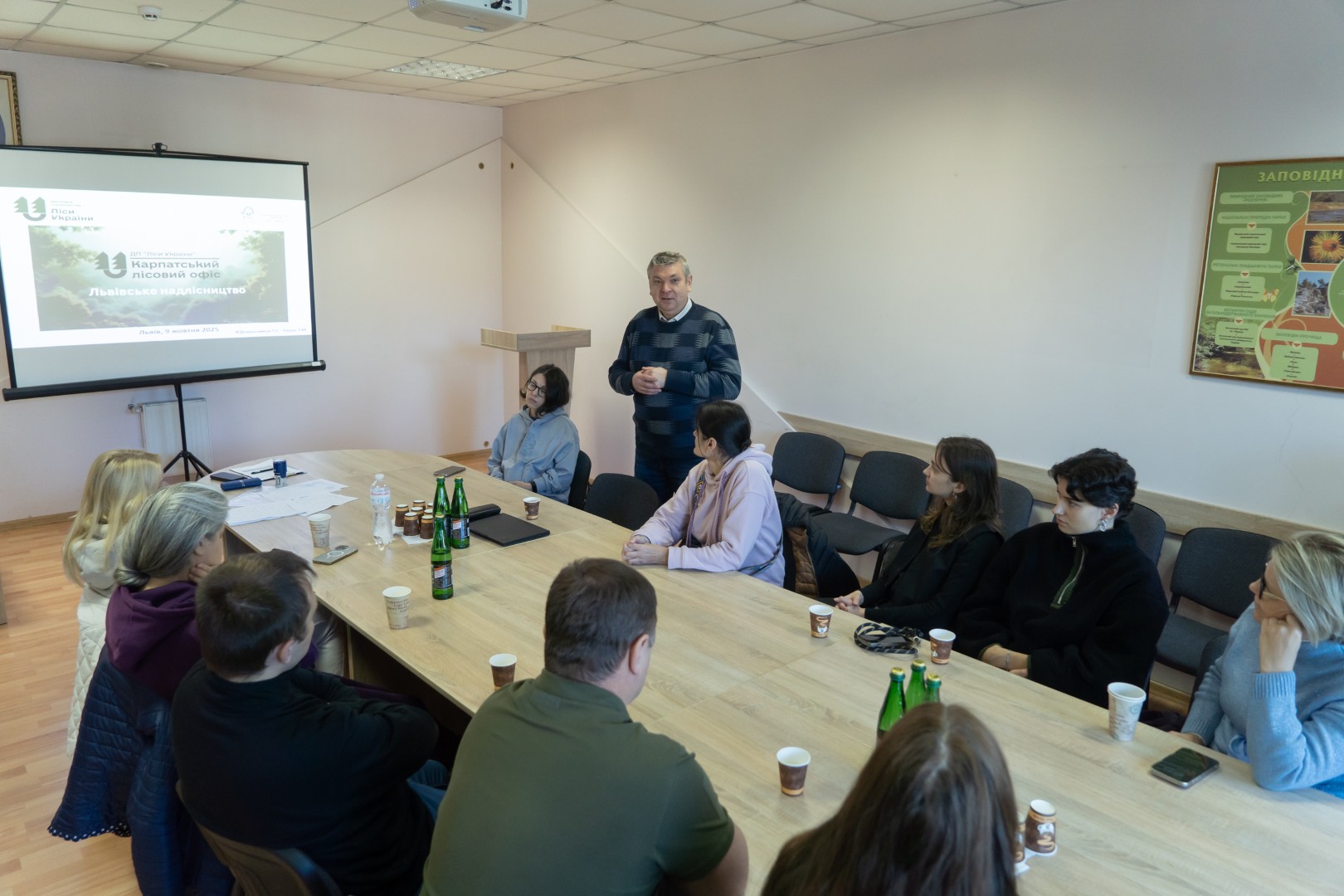
"This is natural regeneration – one of the methods of forest reproduction", explains Taras Chikhrak. "The Forestry Management Unit is gradually moving away from the practice of clear-cutting in favor of selective harvesting methods. Today, 50% of harvesting on all plots is carried out by selective methods with future natural regeneration. Selective cutting is always more difficult, always more problematic than clear-cutting", – honestly admits the Deputy Head of Lvivske Forestry Management Unit. "Selective harvesting requires significantly higher levels of staff professionalism and more complex organization of logging operations compared to clear-cutting, but the economic and environmental advantages of this method are obvious. We credit ourselves at the expense of not spending funds on creating forest plantations –nature does it itself".
 |  |
This thought is confirmed by Halyna Domashovets, Head of the Forest Certification Sector of the Department of Forest Management of the SFE “Forests of Ukraine”: "Selective harvesting with natural regeneration allows avoiding the need to create artificial plantations after cutting. Trees of the upper tier (seed trees) that remain on the site ensure seed regeneration, and the existing undergrowth naturally forms a new stand. This method requires significantly higher qualifications of foresters and more careful planning of forest management operations, but it ensures the formation of more ecologically stable forest ecosystems and rational use of financial resources. Close-to-nature forestry means that we do not oppose natural processes but support and direct them in accordance with the goals of sustainable forest management".
Planting Your Own Tree
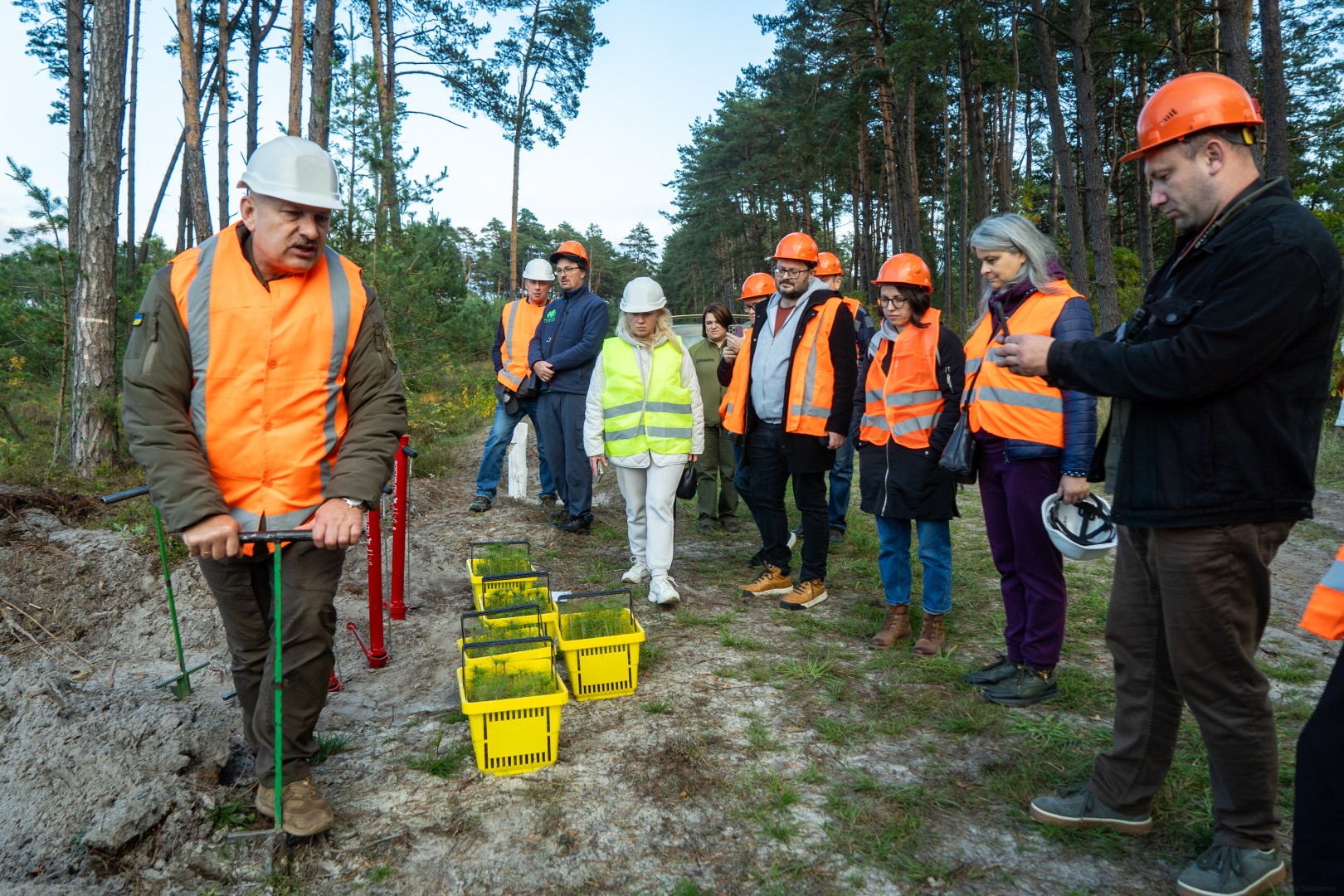
The finale of the first day is practical. Media tour participants plant trees with their own hands in one of the plots. Seedlings with containerized root systems, special tools, instructions. Each plants their future contribution to CO₂ absorption.
 | 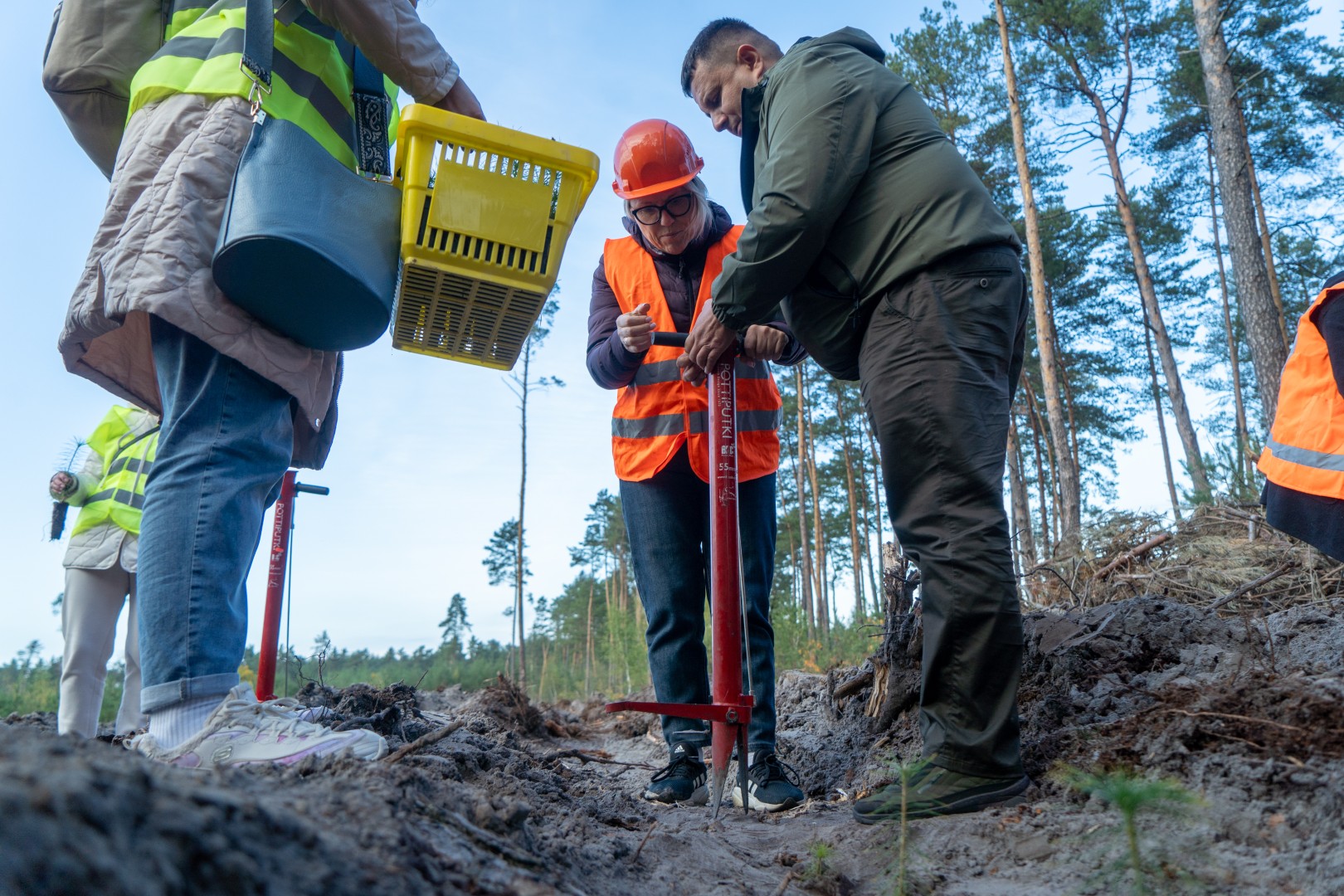 |
Interesting arithmetic, researched by scientists from the National University of Life and Environmental Sciences of Ukraine: to plant one hectare of forest requires about 5 thousand seedlings. One hectare of middle-aged trees, these being the most productive trees aged 30-50 years, produces about 70 kilograms of oxygen daily. One person consumes from 1 to 1.5 kilograms of oxygen per day, athletes – up to 2.5. So if we take an average of 1.5 kilograms, one hectare of forest provides oxygen for 30 to 50 people daily. How many forests are needed to provide Ukrainians with clean air? If not in numbers, then there's never too much forest. "When you've planted a tree with your own hands, you understand the whole cycle differently", shares one of the participants. "From the seed that someone collected and grew, to the seedling I just planted. And tomorrow we'll see how this tree can become a building".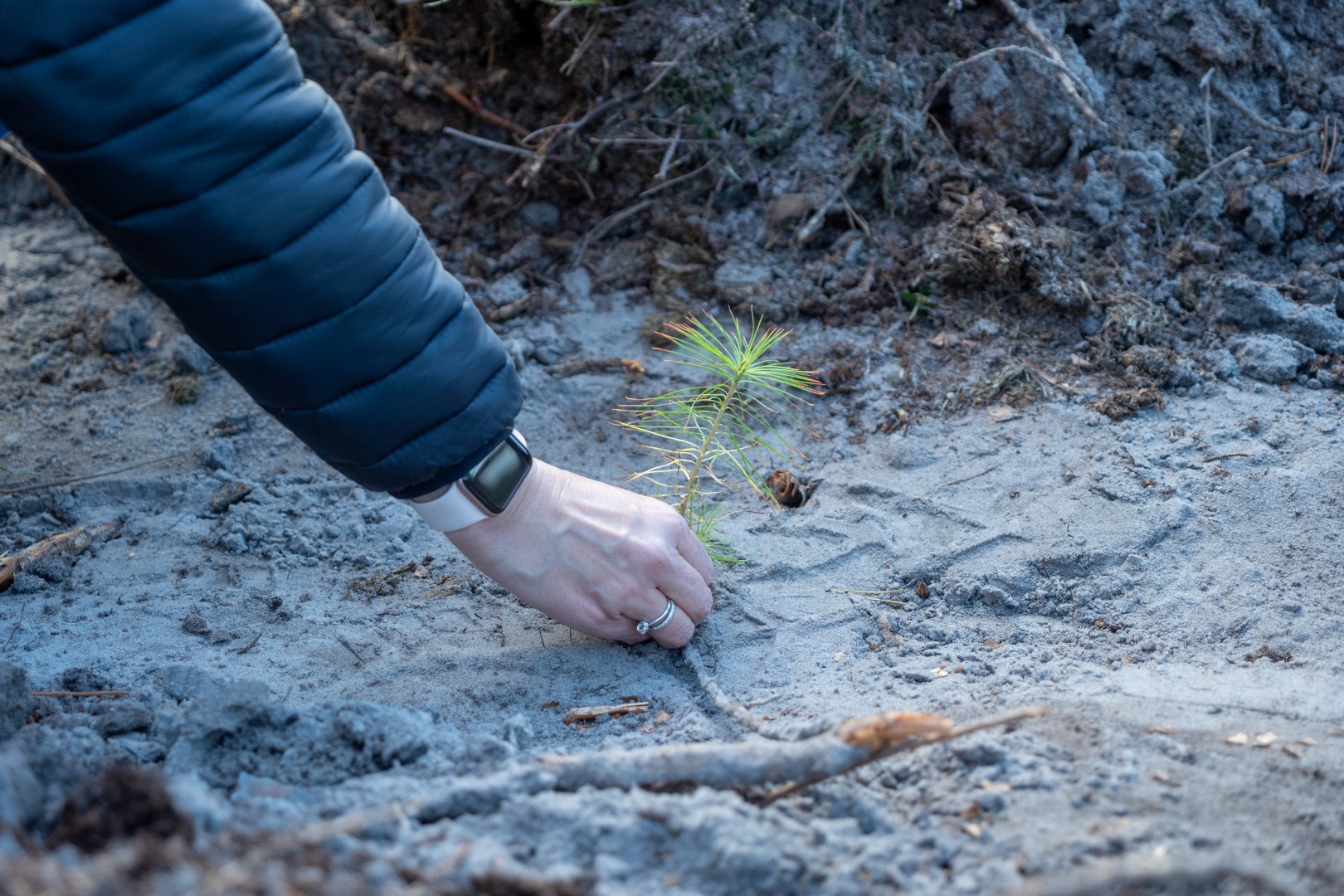
Day Two: FSC as a Market Requirement
The morning of the second day begins with a trip to the small village of Buchaly, where there is an export-oriented enterprise. Here is located the production of "Oktavia Wood" company. This is one of more than 70 enterprises in the Lviv region that use FSC-certified timber.
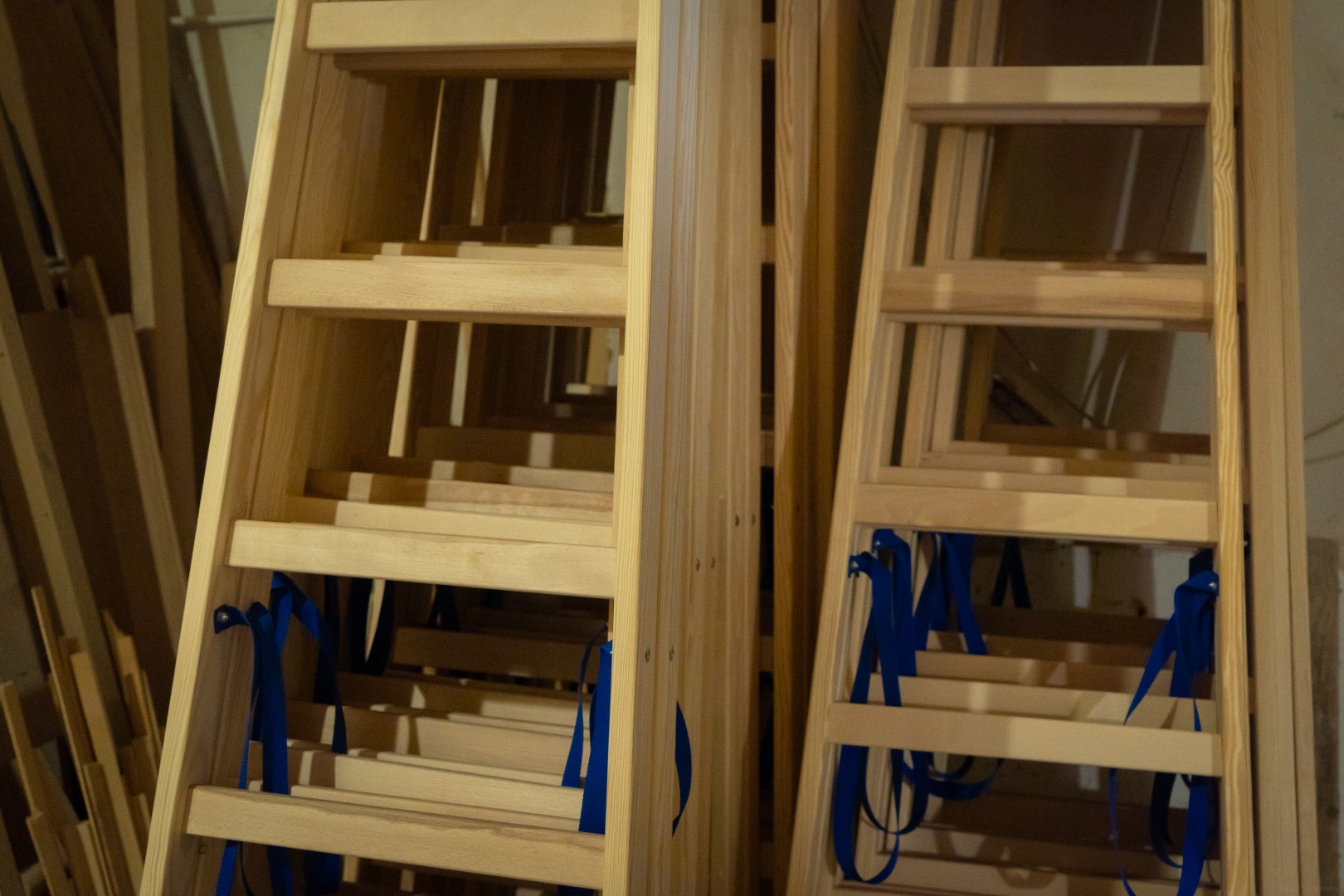
Volodymyr Khrapko, owner of the enterprise, meets the group near the production workshops. One of them was built only six months ago. The enterprise produces wooden ladders that are very popular in Europe, and is expanding production to include windows and doors.
"I started and worked for a long time with elite staircase production. But times are changing, as are market requirements, especially European. Now I work with Italians and Germans", he says. "Italians order wooden step-ladders. And they insisted on FSC certification – because their end consumers demand it. This is a matter of environmental awareness and responsible forestry. Unfortunately, in Ukraine there are no similar requests even from large retail chains".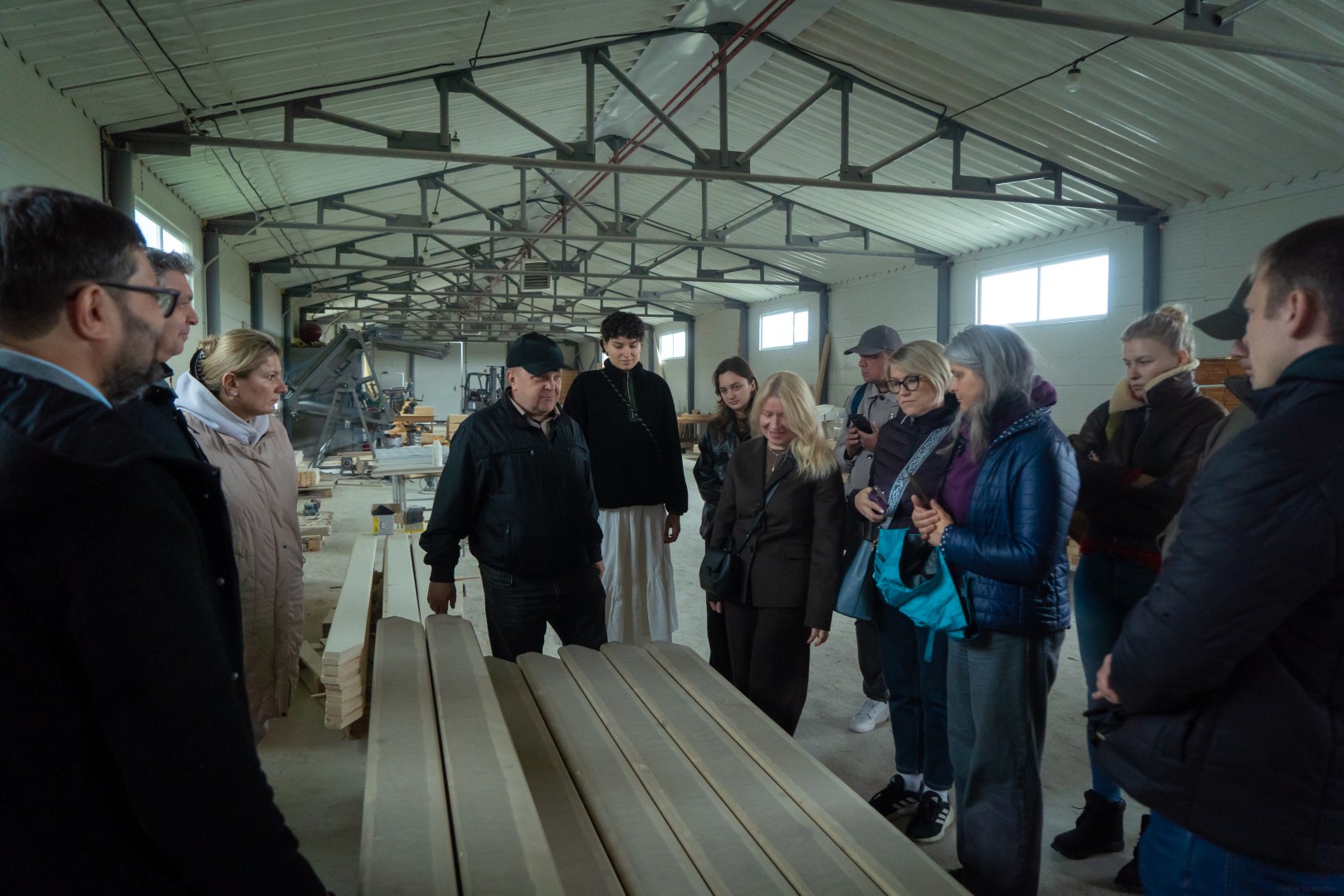
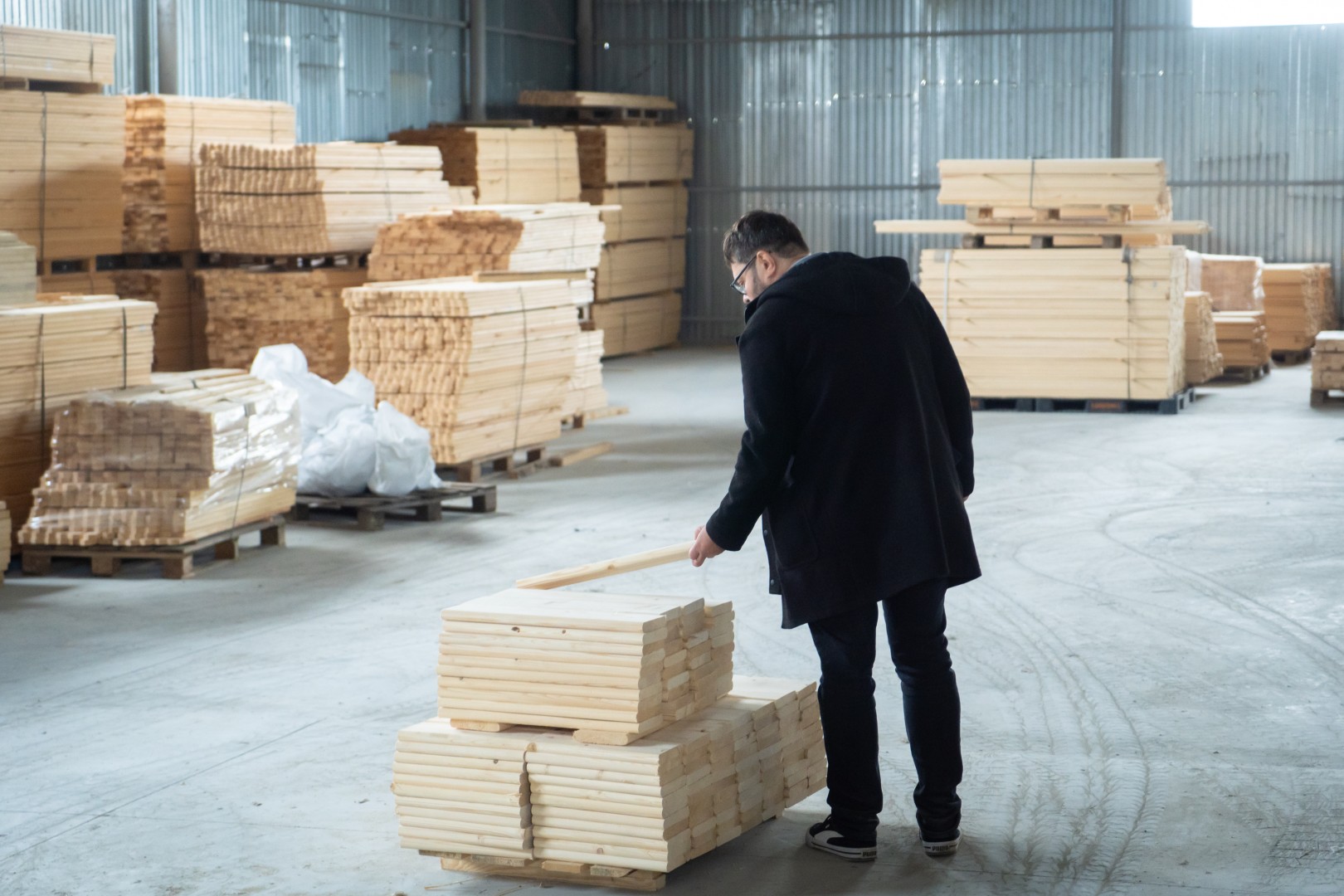
Mr. Volodymyr will soon start door production. "This product will have an affordable price since demand for elite items in Europe is declining. Instead, demand is growing for simple, quality goods from responsible sources”.
Pavlo Kravets, FSC Ukraine National Representative, completes the picture: "Verification of the legality of timber origin through a unified state electronic accounting system is only the first step. For the end consumer and partners, especially in international markets, the continuity of the supply chain – Chain of Custody (CoC) – is critically important. FSC certification, which more than 400 companies in Ukraine adhere to, guarantees that information not only about the legal origin of timber but also about compliance with FSC standards – from harvesting to finished product – is preserved and transmitted, confirming its environmental and social responsibility, as well as low-carbon advantages as a construction material".
From Timber to Responsible Construction
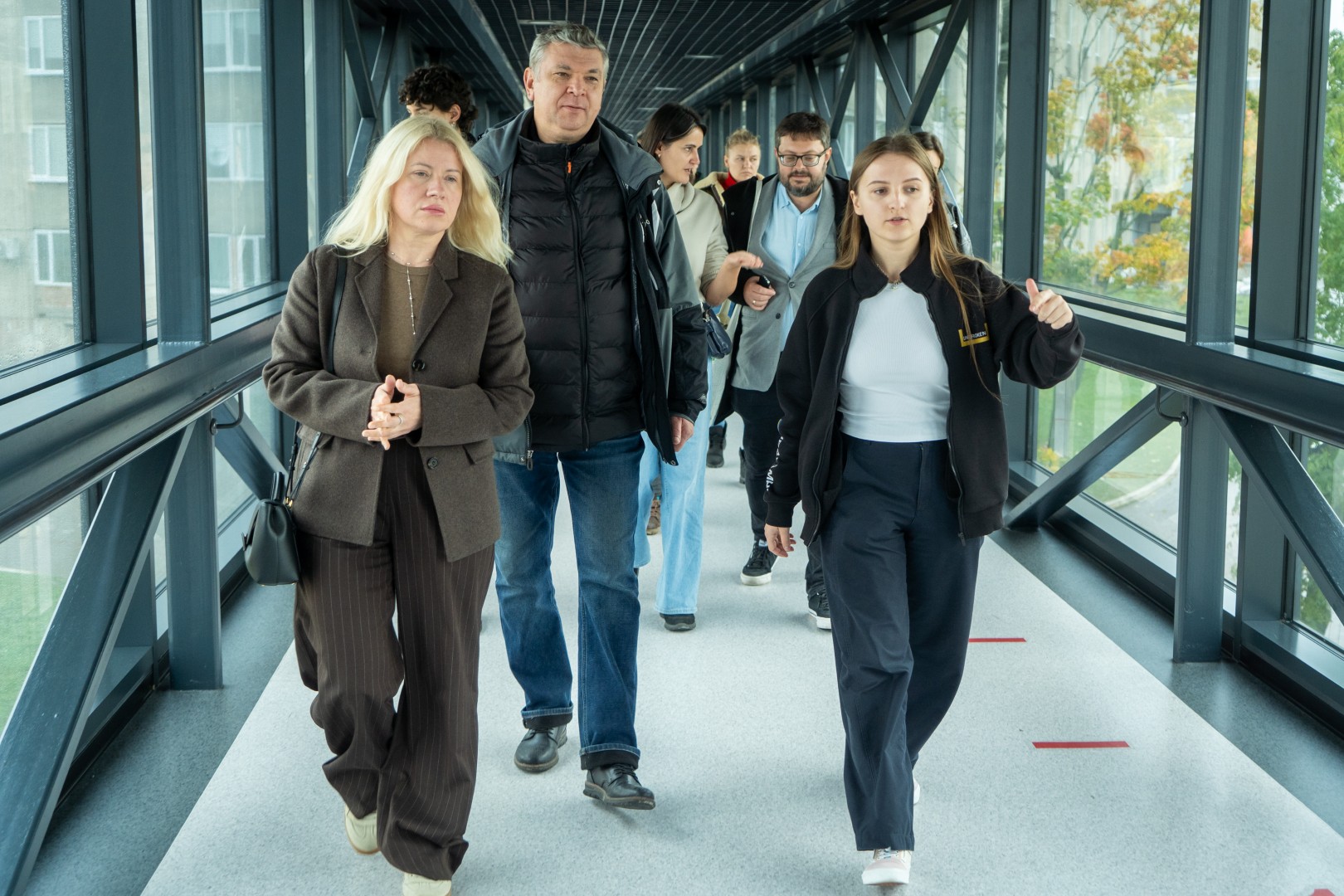
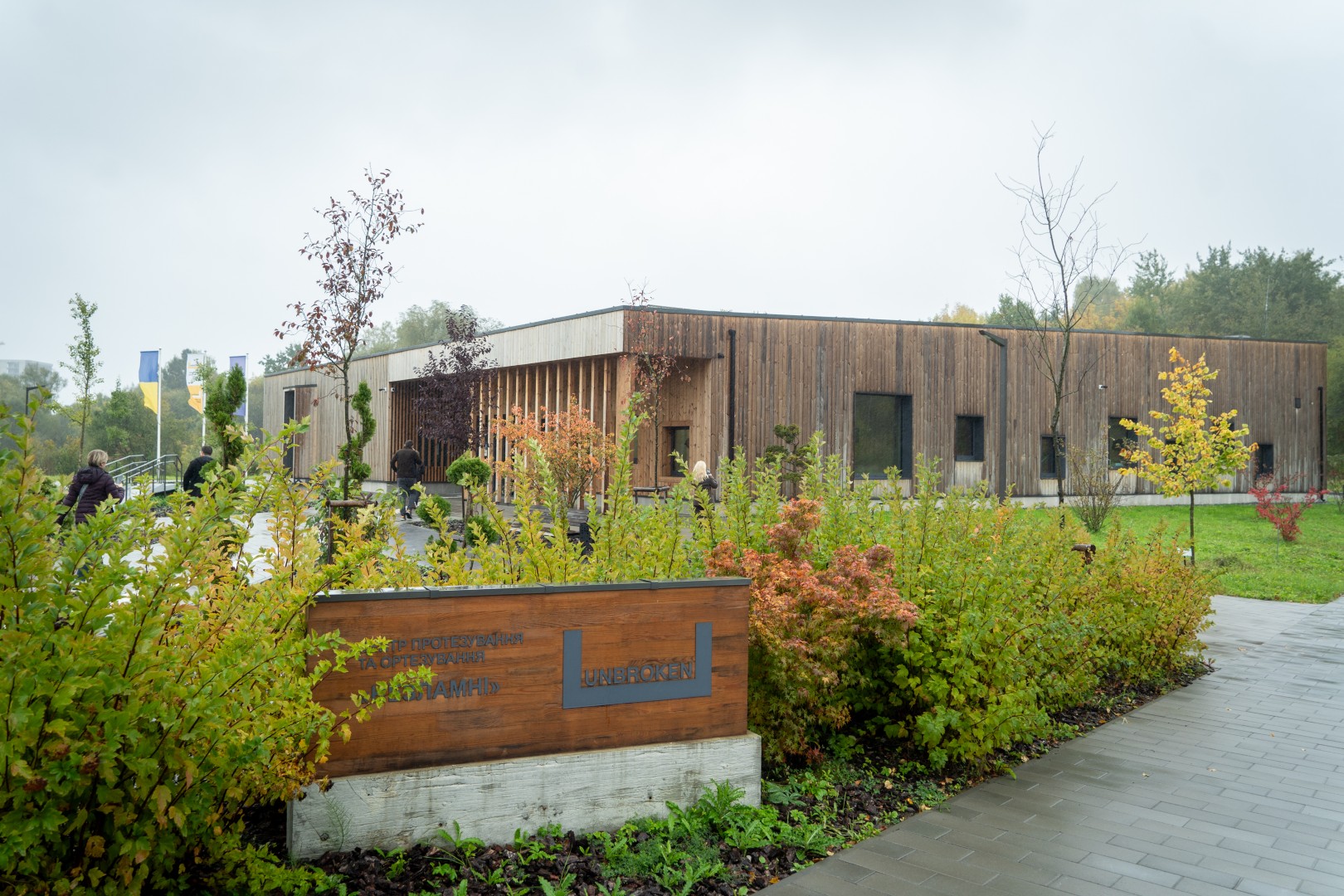
How is wood applied in modern construction? This can be seen very clearly at several facilities in Lviv, which are becoming more numerous. One of them is the Unbroken National Rehabilitation Center.
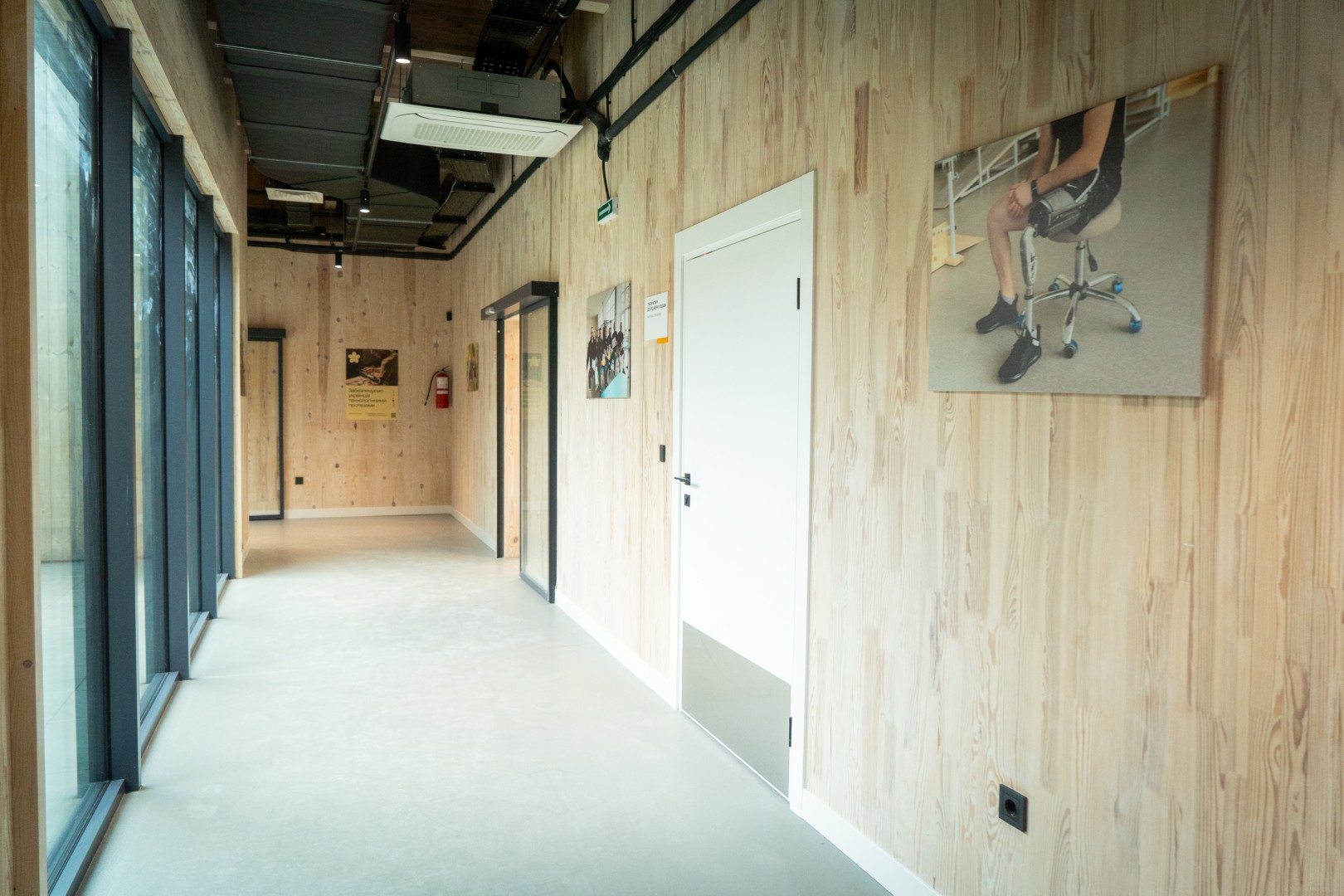
The tour begins with one of the reconstructed buildings of the facility. The upper floors are constructed using CLT technology. Cross-Laminated Timber is panels of several layers of boards, glued perpendicular at 90-degree angles to each other. The technology allows retrofitting and reconstructing existing buildings without significant load on the foundation.
"CLT is as strong as concrete but much lighter and quicker to install", assure representatives of Ukraine's only factory of this innovative material. "Panels are manufactured with millimeter precision, and at the construction site they're simply assembled like a constructor. This reduces construction time by 2-3 times".
 | 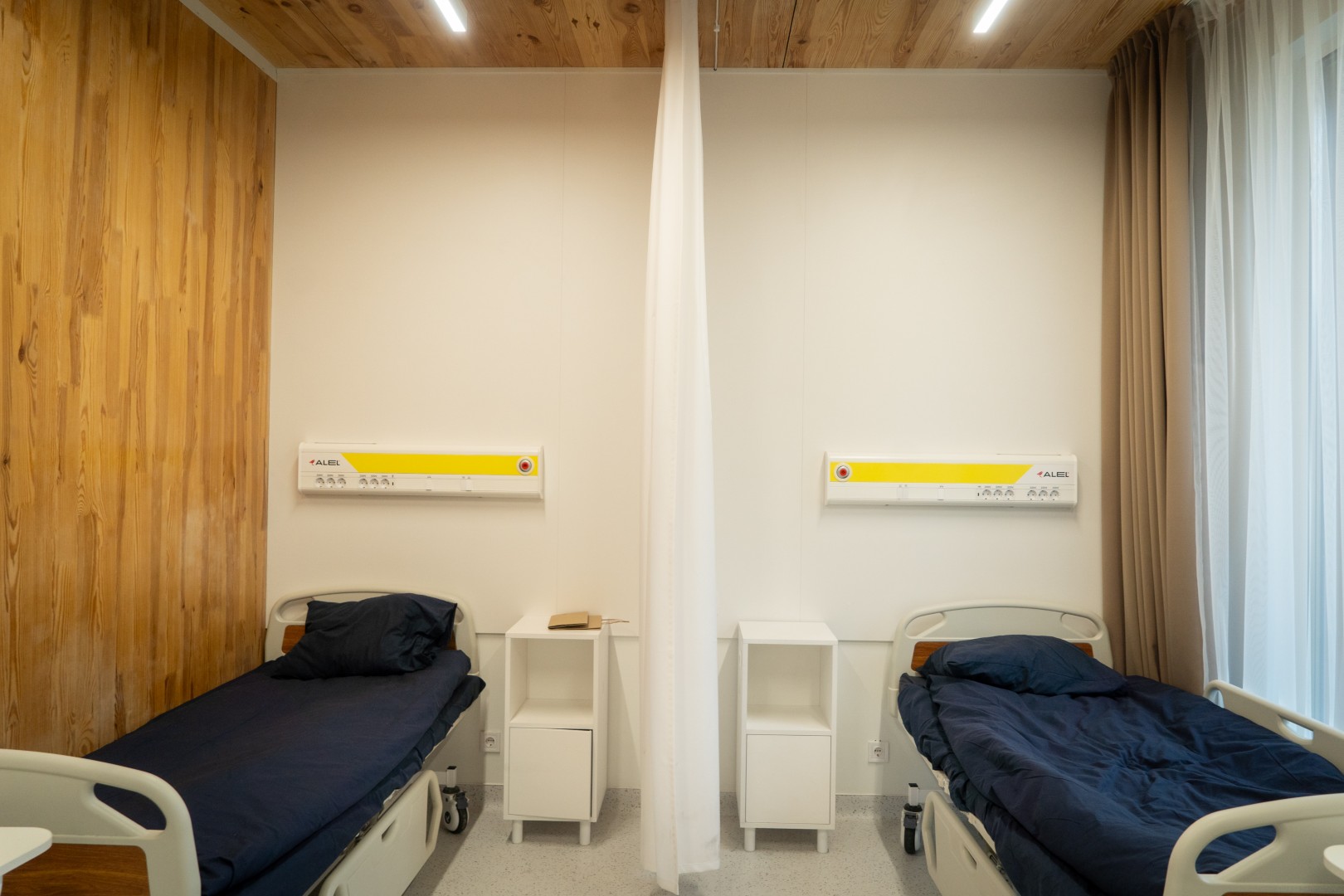 |
The tour continues to Unbroken's prosthetics workshop. Here up to a thousand individual prostheses for people with amputations can be manufactured annually. The workshop space is an open wooden structure with high ceilings and filled with natural light, as the architectural concept is a circular arrangement of the wooden building with an improvised garden in the middle.
Why Low-Carbon Construction? The Numbers Speak for Themselves
The production of one ton of cement is accompanied by emissions of about 900 kg of CO₂, and steel – about 2 tons of CO₂ per ton of material. Timber works differently: instead of emissions during "production", it absorbs carbon throughout its growth period.
If we consider that timber used in a building continues to store carbon for the entire operational life of the structure (50-100 years), then a CLT building effectively becomes a carbon storage facility. One such structure can store thousands of tons of CO₂. And the construction speed and energy efficiency of such structures are what Ukraine will need during large-scale long-term reconstruction.
From Seed to Building and Back
"The educational tour gave us the opportunity to comprehend the entire timber processing cycle in Ukraine – from seed to finished project, with detail at the level of each process", summarizes Kateryna Pylypchuk, Vice President of the International Real Estate Federation (FIABCI-Ukraine). "We confirmed that Ukraine has both FSC-certified timber and quality producers capable of working with it. For me, it was critically important to understand the local supply structure. Now I have first-hand information about the possibility of using Ukrainian product".
She continues: "As a representative of FIABCI-Ukraine, I see great potential in collaboration with FSC to expand the information campaign within our ReBuild Green 2030 program. It's necessary to raise awareness of all stakeholders, including municipalities, about the importance of certified timber and its advantages".
 | 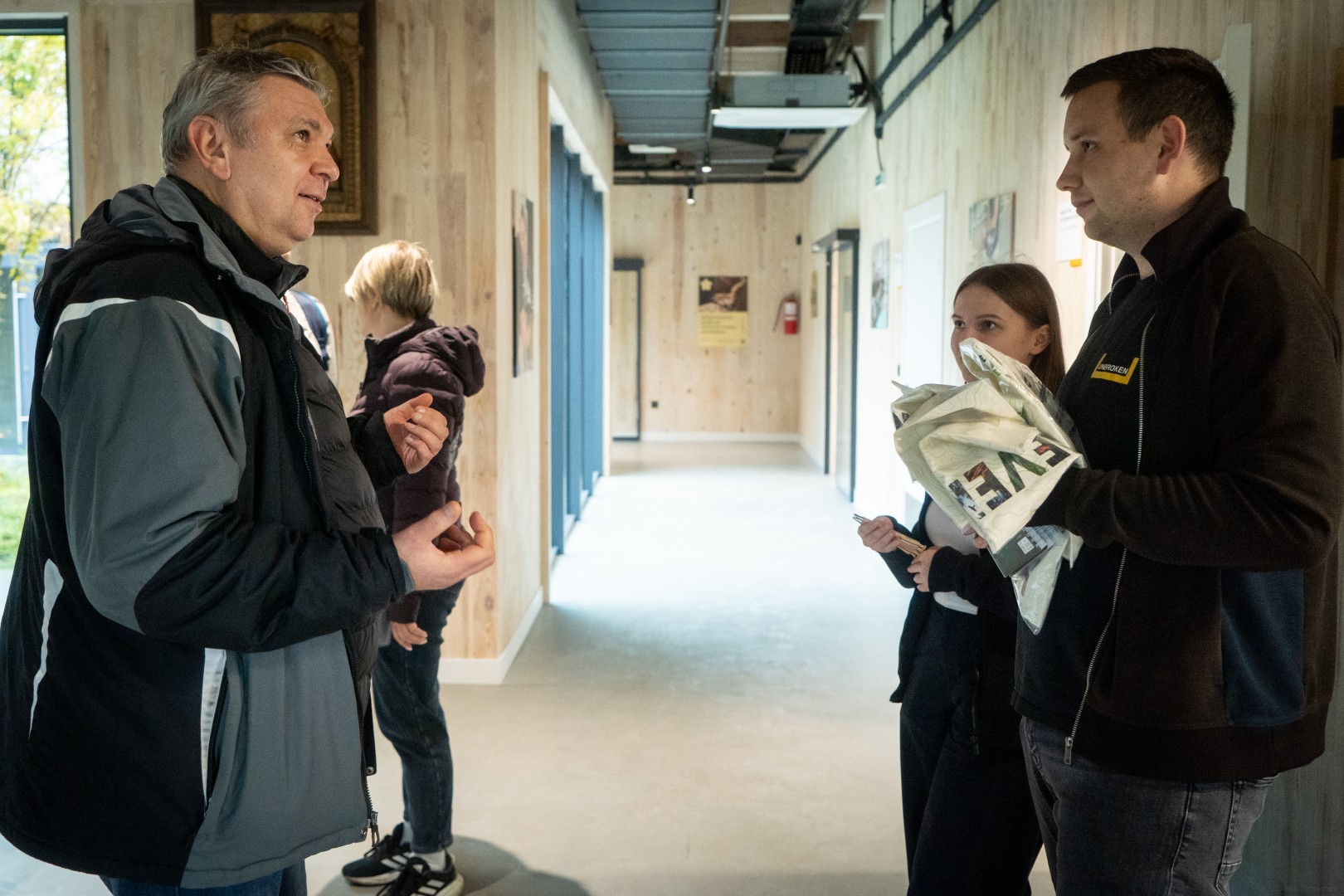 | 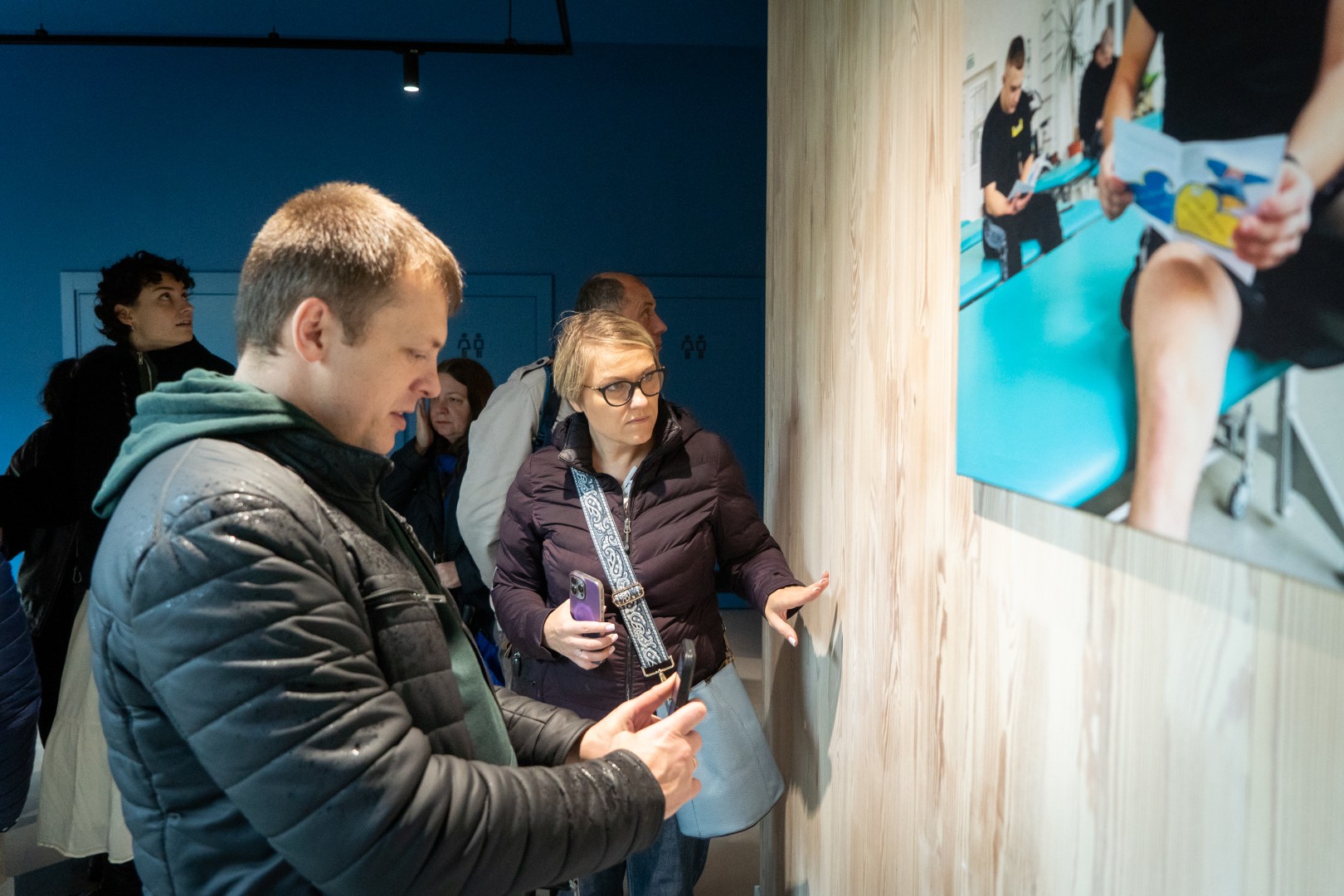 |
Over two days, media tour participants traced the transformation of timber – from the forest seed center and nursery through certified production to modern timber construction structures.
"FSC-certified enterprises and companies gain an advantage in the global market", reminds Pavlo Kravets, FSC Ukraine National Representative. "Big business, consumers, buyers, international organizations want to see this because the end consumer has confidence: by purchasing a product from solid wood, packaged goods, or paper with the FSC logo, I have voted with my funds for forest management being conducted properly. I know that the forest has been restored, valuable forest areas are protected, the interests of local communities are considered, taxes are paid, and workers received fair wages. We're working to ensure that Ukrainian consumers also learn about and appreciate this".
For Ukraine, facing the necessity of reconstruction, low-carbon construction with timber is not just an environmental trend. It's an opportunity to use local resources responsibly, create jobs, preserve ecosystems, and at the same time build quickly, energy-efficiently, and with minimal carbon footprint. Will Ukraine use this potential, which still needs updated building standards, launched educational programs for architects and engineers? Will a system of incentives for using certified timber be created? Questions that the FSC Ukraine team is working on. And everyone can take part in this process.